
KAWTAR AIT EL HAJ
Africa’s Energy Transition: The Decisive Decade for North and West Africa
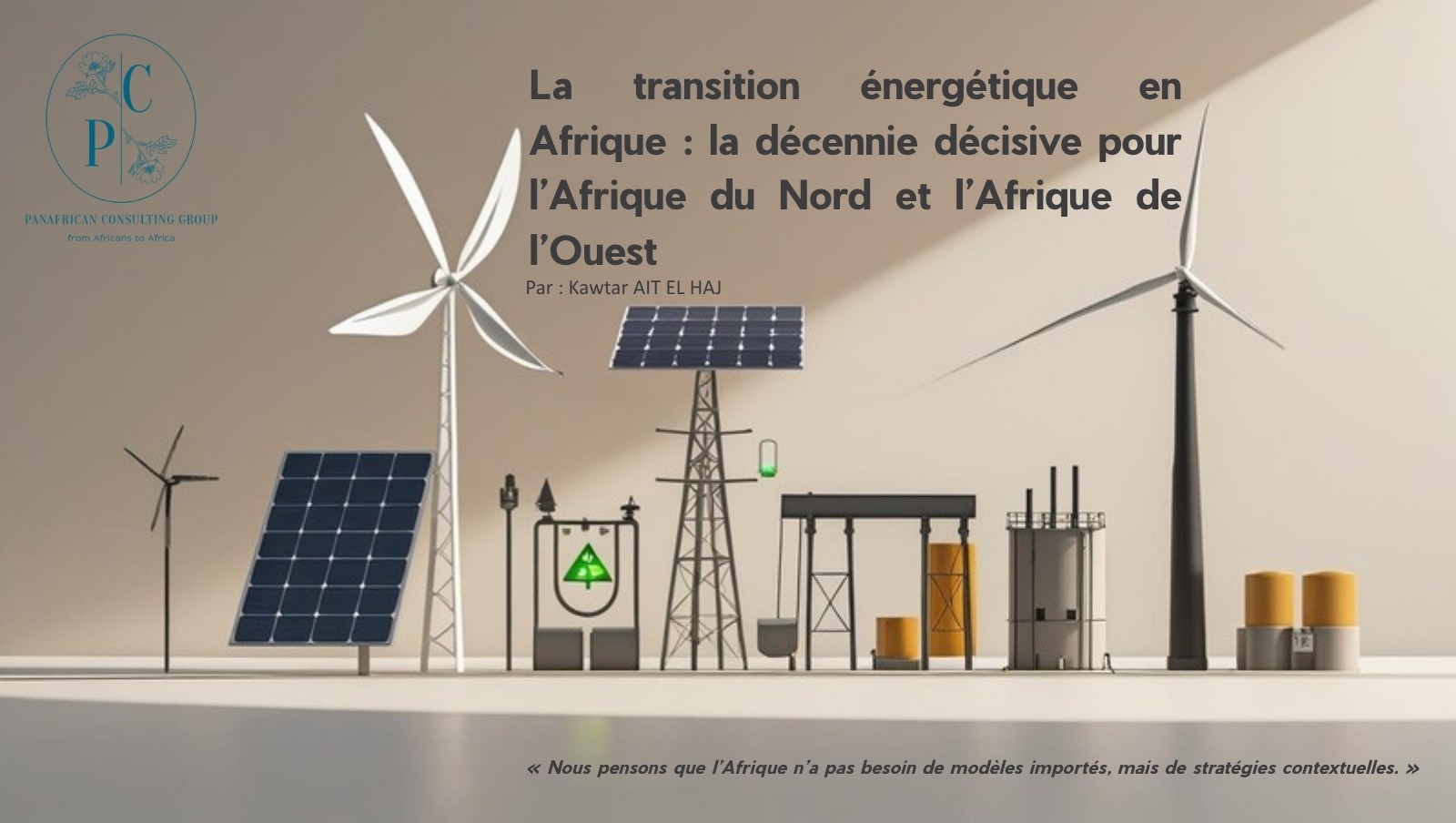
Africa’s Energy Transition: The Decisive Decade for North and West Africa
North and West Africa are quietly but steadily reshaping their energy landscapes. From the Red Sea coast to the Atlantic shores, the momentum behind renewable energy is no longer an abstract vision; it is taking shape through multi-gigawatt projects, national policy reforms and local community-based solutions. Yet the path remains complex.
While new capacity is being added at a record pace, financing structures, regulatory maturity and social acceptance of this transition vary significantly from one country to another.
In North Africa, the energy transition is a strategic priority, not merely an environmental commitment. Egypt’s completion of the 650 MW Red Sea wind farm, Africa’s largest and delivered four months ahead of schedule, demonstrates both the technical capacity and the political will to deploy renewables rapidly. Morocco continues to lead with an integrated solar-wind-hydropower model, relying on projects such as Noor Ouarzazate to establish itself as a clean energy exporter to Europe. Tunisia, despite political and financial pressures, is seeking to attract private capital into solar and wind, targeting a 35% share of renewables in its energy mix by 2030.
Across the Maghreb, the common thread remains the alignment of industrial strategies with energy ambitions, with a close eye on export markets and energy diplomacy.
In West Africa, the picture is more varied but equally promising. Senegal is establishing itself as a regional leader, with 21% of its electricity now coming from solar and wind, surpassing coal for the first time. The Taïba N’Diaye wind farm, operational since 2021, remains a flagship project, while the $2.8 billion Just Energy Transition Partnership (JETP) aims to increase renewables to 40% of the national energy mix by 2030. Cape Verde, with a modest electricity grid but ambitious plans, is expanding wind and solar to reduce its dependence on imported diesel. Nigeria, the region’s economic heavyweight, is seeing a proliferation of private sector-led solar mini-grids, bringing electricity to underserved rural areas and significantly increasing household and SME incomes. Ghana, slower to deploy renewables at scale, is adjusting its policy to pave the way for independent power producers in solar and wind.
Yet behind this progress lie structural challenges. Financing remains a persistent obstacle. While initiatives such as the JETP or the Accelerated Partnership for Renewables in Africa (APRA) provide an enabling framework, most available funding remains debt-based, raising concerns among countries already under fiscal pressure. The condition of electricity grids is another constraint: integrating variable renewable sources into ageing infrastructure requires investment that often lags behind generation.
Compounding this are the complexity of the energy mix and the lack of visibility into its actual composition. Many countries announce ambitious targets, but the precise balance between green energy and fossil fuel sources remains unclear. Without transparent, real-time data on generation and distribution, it is difficult to design a scenario that both keeps electricity affordable and maintains the greenest possible energy mix.
The risk, then, is overestimating the ability of renewables to replace fossil fuels rapidly, or underestimating the financial implications of accelerated integration.
The social dimension of the transition is equally essential. In Senegal, rural communities connected to solar mini-grids are seeing economic and social benefits, from longer business opening hours to improved healthcare services. But in regions dependent on fossil fuels for employment, such as parts of northern Nigeria or Mauritania’s emerging gas sector, the energy transition is being met with both optimism and caution. Managing it without exacerbating unemployment or regional inequalities will be a decisive test for policymakers.
North and West Africa stand at a point of convergence: their renewable energy potential is immense, their political rhetoric increasingly ambitious, and their strategic position between African demand and European energy needs particularly advantageous. The decisive question is whether this decade will translate these ambitions into resilient, inclusive and self-sufficient energy systems, or whether financial, technical and political bottlenecks will slow the momentum.
The stakes extend beyond megawatts: they concern sovereignty, industrial competitiveness and the continent’s long-term place in the global energy order.
#RenewableEnergy #Africa #EnergyTransition #Senegal #Egypt #Morocco #WestAfrica #NorthAfrica #SolarEnergy #WindEnergy #SustainableDevelopment #EnergyMix #GreenEconomy #ClimateFinance #JustTransition
Save my name, email and website in this browser for the next time I comment.
PANAFRICAN ADVISORY
Let’s prepare your next decision.
Growth, investment or partnership: start with the realities of your market.