
KAWTAR AIT EL HAJ
Agriculture in Africa: From Silent Losses to Structural Gains
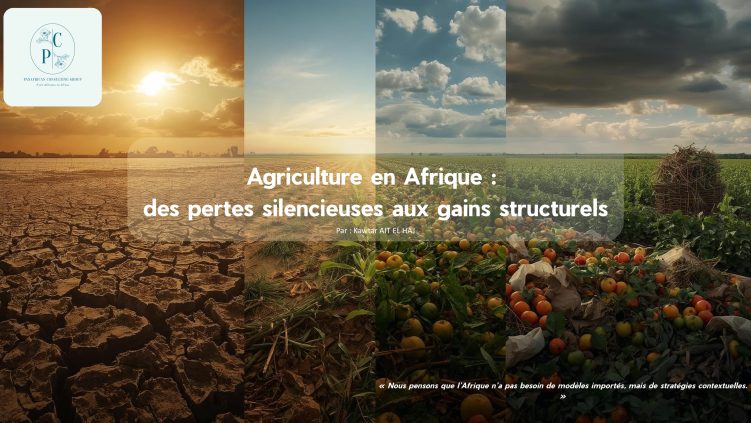
Agriculture in Africa: From Silent Losses to Structural Gains
A few days ago, I responded to a post showing mangoes rotting by the roadside in the Niayes region of Senegal. I posed a simple question: what if we calculated the cost of all those years of silent losses? What if we measured the income forgone from every tonne of produce abandoned instead of being processed, exported or simply stored properly?
The figures would reveal far more than an agricultural problem. They would expose a loss of national wealth. What disappears along those roads is not just fruit. It is jobs that are never created, added value that evaporates, foreign exchange earnings that never materialise and economic sovereignty allowed to slip away.
The Paradox of Abundance
Côte d’Ivoire illustrates this paradox. The world’s leading cocoa producer, with more than two million tonnes exported each year, the country processes only a small share of this wealth locally. The profits of the chocolate industry, meanwhile, are concentrated elsewhere. Production is there, but the added value flows abroad.
In Guinea, as in the Democratic Republic of the Congo, the problem takes the form of waste. Studies estimate that post-harvest losses in Africa can reach 30 to 50%, depending on the crop. Every bag of maize, every basket of tomatoes spoiled for lack of storage or transport infrastructure represents more than lost food. It is income that disappears, a job that is never created and nourishment that never reaches families.
Progress and Delays
Some countries are trying to break this cycle. Senegal has shown a clear commitment to strengthening processing and exports, particularly in groundnuts and horticulture. But implementation delays, a lack of coordination and insufficient infrastructure investment are limiting results.
Kenya illustrates the potential of digital platforms to connect small-scale producers with urban markets. The country is also a global player in floriculture. But without cold chains or efficient logistics, a large share of fresh produce is lost before it reaches consumers.
Egypt and Morocco demonstrate how irrigation, technology and export-oriented value chains can deliver tangible results. Fruit and vegetables supply European markets. Yet many smallholder farmers remain on the margins of these modernised chains, while dependence on imported inputs undermines sustainability.
South Africa has a mechanised, high-performing agricultural sector, but unequal land ownership and the limited integration of small-scale producers constrain inclusion and deepen divides.
The Cost of Waste
When value chains fail to function, losses accumulate. They are not measured solely in tonnes of mangoes or cocoa. They translate into forgone percentage points of GDP, lost export earnings and weakened resilience. The World Bank notes that sub-Saharan Africa loses billions of dollars each year because of post-harvest inefficiencies. The FAO estimates that, on average, 37% of the food produced in the region is lost before consumption.
A Question of Sovereignty
At the Africa Food Systems Forum held in Dakar, many stakeholders reiterated that agricultural transformation cannot be separated from the continent’s sovereignty agenda. As long as value chains remain weak, Africa will depend on imports and suffer the effects of external shocks. As long as preservation and processing systems remain inadequate, seasonal surpluses will turn into chronic losses.
The real question, then, is not whether Africa can produce. It already does. The question is whether it can process, preserve and export efficiently and equitably.
Turning Losses into Wealth
The silent losses of past decades cannot be recovered. But they can offer lessons. Agriculture must be viewed as a complete chain. From seed to market, every missing link creates value leakage. Every weak link generates waste.
The task ahead is clear: invest in processing, storage, logistics, cooperatives and inclusive models. Measure sovereignty not just by hectares cultivated, but by the value actually captured and retained.
What is rotting along the continent’s roads is more than food. It reflects the urgent need to rethink African agriculture. It is time to turn these losses into structural gains and make agriculture a pillar of sovereignty.
#Africa #Agriculture #ValueChains #FoodSystems #Sovereignty
Save my name, email and website in this browser for the next time I comment.
PANAFRICAN ADVISORY
Let’s prepare your next decision.
Growth, investment or partnership: start with the realities of your market.